Cheung Chau in Heavy Rain What the Rainstorm Warnings Mean and Your Wet-Weather Plan
Heavy rain does not stop the ferries to Cheung Chau, but it does change the island. With a rainstorm warning in force, or a thunderstorm warning over the territory, the two gazetted beaches fly a red flag and empty out, the coastal trails turn slippery, and the rule of thumb for the water is simple: no swimming until up to three days after the heavy rain has passed. This page explains what the warning on your phone means for the beaches, the trails and a day on the island — so a wet forecast becomes a change of plan rather than a wasted ferry fare.
The three rainstorm warning signals, in plain words
Hong Kong's rainstorm warnings come in three levels, set by how much rain has fallen or is expected — generally over the whole territory, and likely to continue. The figures below are the Observatory's own.
| Signal | Rainfall | What it asks of you |
|---|---|---|
| Amber Rainstorm Warning Signal | Heavy rain exceeding 30 millimetres in an hour has fallen or is expected | An alert that heavier rain may follow. Take the usual precautions against flooding and avoid low-lying, easily flooded spots. |
| Red Rainstorm Warning Signal | Heavy rain exceeding 50 millimetres in an hour | Likely to bring serious road flooding and traffic congestion. People working outdoors in exposed areas should suspend outdoor duties. |
| Black Rainstorm Warning Signal | Very heavy rain exceeding 70 millimetres in an hour | Stay indoors or take shelter until the heavy rain has passed. The Home Affairs Department opens temporary shelters. |
Three things about reading these levels matter for a day on the island. The rainstorm warnings are independent of the tropical-cyclone (typhoon) warnings — one system can be in force without the other. The hourly figures are guidance only: when rain is prolonged, a signal can be issued even if that particular hour did not reach the number. And the levels do not have to climb in order — a Red can be issued without an Amber before it, and a Black without a Red. Hong Kong's rainy season normally runs from April to September, with rain particularly heavy and persistent in May and June.
What a thunderstorm warning does to the beach
A thunderstorm warning is the one that clears the sand fastest. When it covers the region, the Leisure and Cultural Services Department (LCSD) hoists the red flag at its public beaches and provides only limited lifeguard service. Swimmers are told over a loudspeaker to leave the water immediately and take shelter. The red flag goes up when a thunderstorm warning affects the region, when lightning is reported within a 10-kilometre radius, when an Amber Rainstorm Warning or above is in force, or when there is lightning or frequent thunder at the beach itself.
The red flag is not a suggestion. The LCSD Swimmers' Handbook says plainly: do not enter the water when the red flag and the shark warning flag are hoisted, and do not enter the water when a red flag is hoisted because of red tide. The Observatory's thunderstorm precautions add the obvious: leave the water, do not swim outdoors or take part in outdoor water sports, do not stand on high ground, and keep away from trees and masts while you shelter.
Cheung Chau has two gazetted beaches: Cheung Chau Tung Wan Beach on Cheung Chau Beach Road, and Kwun Yam Beach on Hak Pai Road. Both have shark prevention nets. In a thunderstorm, expect the red flag at either.
Trails and landslip risk
When persistent heavy rain raises the risk of many landslips, the Observatory issues a Landslip Warning with the Geotechnical Engineering Office. The advice is to cancel non-essential appointments and avoid walking close to steep slopes. Cheung Chau's own coastal path — the Mini Great Wall and its cliffside sections — runs along exactly that kind of ground, and wet granite is genuinely slippery underfoot. If a Landslip Warning is in force, treat the coastal trails as a plan for another day. For the nearest temporary shelter, the Home Affairs Department runs an emergency hotline on 2572 8427.
Swimming after the rain
The water itself needs time after a downpour. The Environmental Protection Department (EPD) advises that heavy rain may flush pollutants into the sea, and that bathers should avoid swimming during, and for up to three days after, heavy rain. The LCSD puts rainfall advisory signs at the beaches to say the same thing, so check the notices by the shore before you get changed rather than taking the water quality from the last sunny week.
A wet-weather plan for Cheung Chau
Use this itinerary only when there is no Black Rainstorm Warning in force and outdoor travel is safe. During a Black warning, stay indoors or take shelter until the heavy rain has passed; sheltering takes precedence over this plan. If a thunderstorm, landslip risk, flooding or other unsafe conditions make outdoor travel hazardous, stay in a safe place and skip the stops below.
When conditions are safe for outdoor travel, a rained-out day on Cheung Chau is not a dead day. The village is compact and the ferry pier puts you in the middle of it, so the practical plan is to shorten your radius and stay on the sheltered, built-up part of the island:
- Wander the covered village market and the lanes behind the pier. The shopping streets around the harbour are close-set and busy with stalls, so you can keep moving between cover.
- Visit a temple. Cheung Chau's temples, including the Pak Tai Temple, are indoor spaces within a few minutes of the pier — a natural shelter and a good look at the island's culture in one stop.
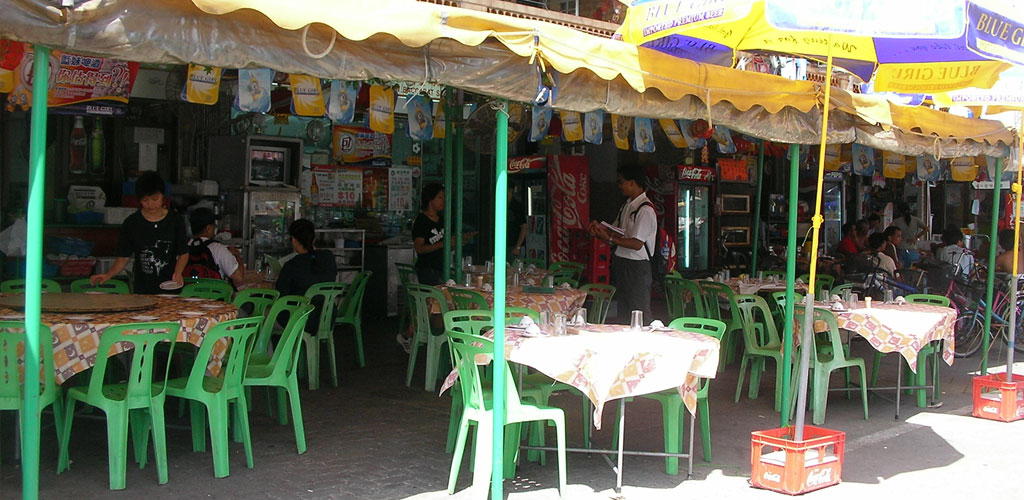
- Eat a long, slow lunch on the harbour front. The seafood restaurants and cafés along the promenade are the classic wet-day move: covered seating, a view of the rain over the water, and no reason to hurry back into it.
- Keep the walk short and the ferry close. If the rain sets in, the sensible move is a short loop through the village and an earlier ferry back to Central rather than a trek to the far end of the island.
- Carry the right kit: an umbrella or a compact rain jacket, footwear with grip for wet paving and granite, and a charged phone so you can check the latest warning.
Frequently asked questions
Is the beach open in the rain?
The beach itself is not gated, but under a thunderstorm warning the LCSD hoists the red flag at Cheung Chau Tung Wan Beach and Kwun Yam Beach and runs only limited lifeguard service. Swimmers are told over a loudspeaker to leave the water and take shelter, and the Swimmers' Handbook says not to enter the water when the red flag is up.
Can I swim after a storm?
Not straight away. The Environmental Protection Department advises bathers to avoid swimming during, and for up to three days after, heavy rain, because runoff can flush pollutants into the water. Check the rainfall advisory signs at the beach before swimming.
Do the ferries stop in heavy rain?
Heavy rain on its own does not suspend the ferry service. It is the typhoon signals, not a rainstorm warning, that disrupt sailings.
What can I do indoors on Cheung Chau?
During a Black Rainstorm Warning, stay indoors or take shelter until the heavy rain has passed; do not travel between stops, and follow official instructions. Only when no Black warning is in force and outdoor travel is safe, consider the covered market streets behind the pier, temples such as Pak Tai Temple, or harbour-front restaurants and cafés. Keep walking short, and skip outdoor travel if conditions become unsafe.
Related guides
- Cheung Chau weather and the best time to visit
- Cheung Chau beach guide 2027
- Tung Wan Beach: the complete guide
- Swimming, beaches and water sports
- The Mini Great Wall hiking guide
- Ferry schedule and transport guide
- The full ferry timetable
- How to get to Cheung Chau
- What to buy on Cheung Chau
- Cheung Chau map
Sources: Hong Kong Observatory: Rainstorm Warning System; Thunderstorm Warning; Landslip Warning; LCSD: Beach arrangements during a thunderstorm warning; LCSD Swimmers' Handbook; EPD: Rainfall's effect on beach water quality; HAD: Emergency services and temporary shelters.